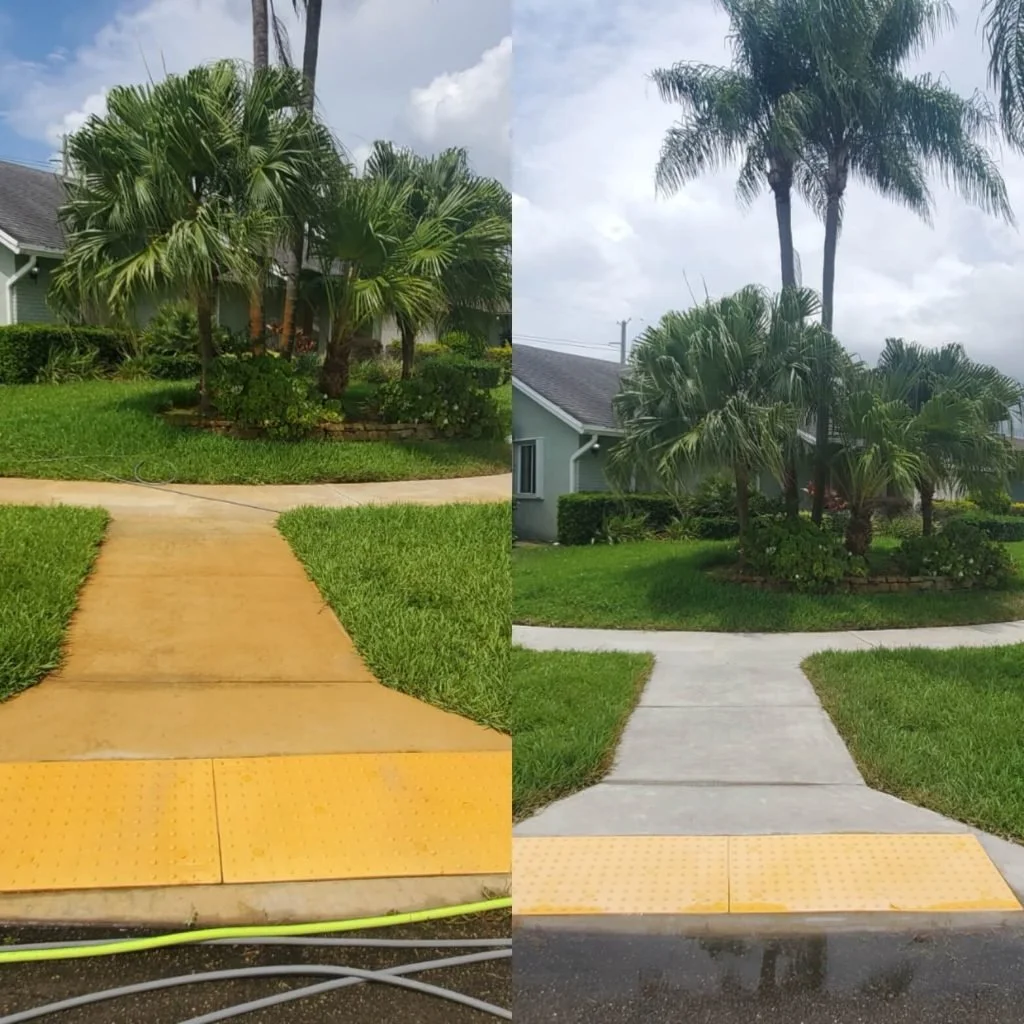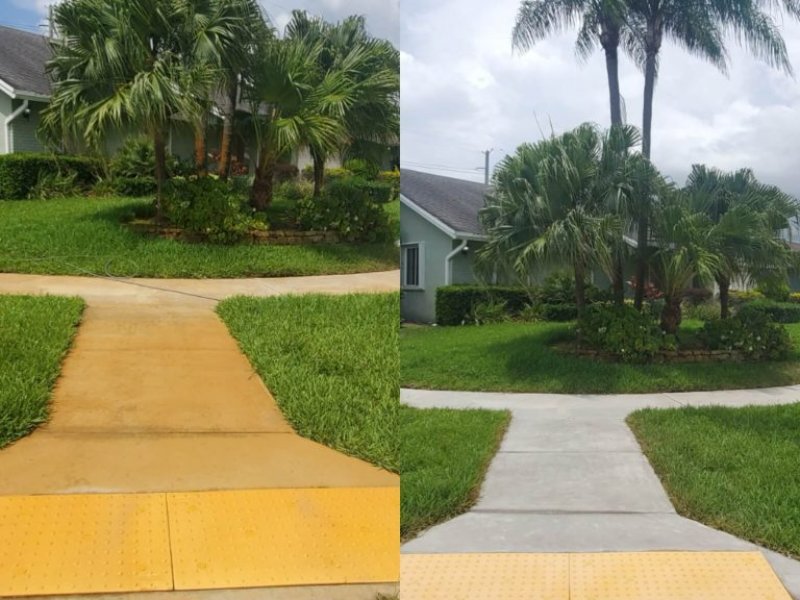
You’re gazing at the driveway or patio at your home in Wellington, Florida — and you notice those orange‑rust streaks creeping across the concrete. You know these unsightly marks don’t belong, and they’re chipping away at your property’s curb appeal. That’s where Oleyn’s steps in: we help you uncover the source, put a stop to it, and get your concrete surfaces clean and protected.
The Problem
Rust stains on concrete don’t just appear by chance — they’re a sign that metal, moisture, or chemical activity is at work beneath the surface. If you just clean the mark without finding the cause, it will come back (or, worse, lead to structural deterioration).
Here are the typical “whys” behind those orange‑brown stains:
1. Metal items sitting on or near the concrete
Objects like patio furniture, lawn tools, fence posts, metal planters, or even irrigation parts can leave rust marks if the metal touches the concrete and that metal corrodes. According to our friends at ConcreteNetwork.com, the combination of dampness + iron = rust deposits leaching into the concrete’s pores.
2. Embedded steel (rebar or wire mesh) doing damage from within
If your slab has steel reinforcement too close to the surface, or if the concrete cover is thin/cracked, water can reach the steel and cause it to rust. That rust can then “bleed” out to the surface, causing stains and possibly even cracking.
3. Fertilizers or landscaping materials with iron content
In Florida, landscaping is everywhere. Some fertilizers contain iron or other metals, and when watering or rain happens, they wash onto the concrete and oxidize — leaving rust‑colored spots.
4. Aggregate or stone within the concrete that naturally contains iron‑rich particles
Occasionally, the stones or sand used in the concrete mix contain iron‑rich minerals (like “ironstone” or pyrites), which oxidize over time and stain the surface from within.
The Stake (What’s at risk)
When rust shows up on your concrete, it’s not just about appearance:
- The visual effect reduces the clean, well‑maintained look you want for your home in Wellington.
- If steel reinforcement is rusting, the expanding rust can crack or spall the concrete, which means bigger repair bills later.
- Misidentifying the rust source means you clean it today, and it returns tomorrow. Frustrating.
The Plan (How Oleyn’s will walk you through it)
Here’s how we at Oleyn’s help you identify and remedy rust stains on your concrete – in three clear phases:
Step 1: Identify the source
- We inspect the stained area: Is the stain coming from a visible metal object sitting on the concrete? Is it an embedded rust line coming up from below? Are there nearby sprinkler heads or irrigation parts with iron deposits?
- We ask landscaping and usage questions: Has fertilizer been used recently? Has heavy equipment or metal furniture been sitting on the slab?
- Based on clues, we determine whether it’s a surface issue (metal item) or a structural/internal issue (rebar, aggregate), or a landscaping/chemical issue (fertilizer).
Step 2: Recommend corrective action
- For surface metal items: Remove or replace the item (or add a protective barrier), clean the rust stain properly, and seal the concrete.
- For embedded steel or internal issues: We may recommend exposing the area, repairing the concrete, re‑sealing, and treating to stop the rust bleed.
- For fertilizers/chemical sources: Clean the surface, flush off residue, ensure future treatments and runoff are managed, and seal the concrete.
Step 3: Clean and protect
- Use appropriate cleaners: simple acids (like vinegar) or commercial rust‑removers for the invested stains.
- Scrub and rinse, often pressure‑wash to fully remove rust from the pores of the concrete.
- Finish with a protective sealing layer so the concrete is less prone to future rust‑staining.
The Success
Imagine your home’s concrete surfaces looking spotless and uniform again. No more orange streaks. No more guessing about “where did that come from?”. With Oleyn’s, you’ll regain the clean appearance and avoid the frustration of recurring stains. You’ll have peace of mind knowing the cause was handled—not just the symptom.