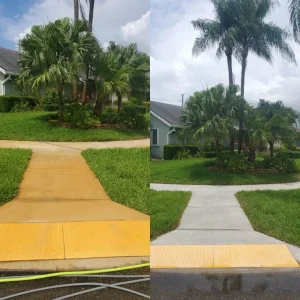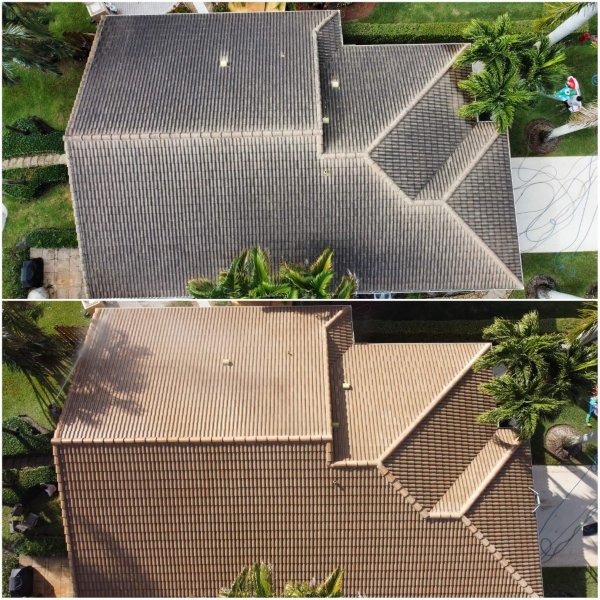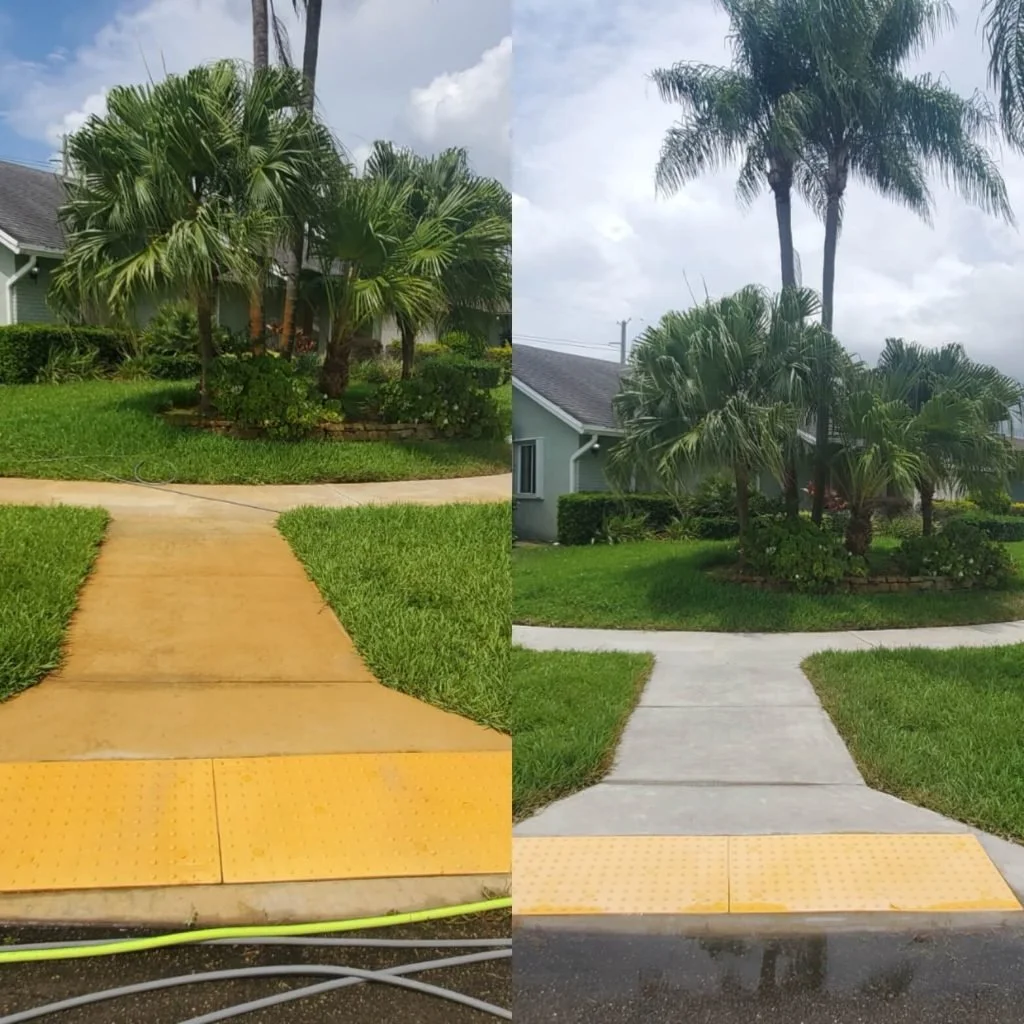
You clean your driveway, patio, walkway, or pool deck, only to notice those stubborn orange and reddish-brown stains coming back a few weeks later.
It can be frustrating. You may scrub, rinse, and even pressure wash the concrete, but the stains keep returning. The good news is that recurring rust stains usually aren’t random. There is often an ongoing source putting iron onto your concrete.
For Florida homeowners, one of the biggest culprits is iron-rich irrigation water. Understanding where the rust comes from—and addressing the source—can help you keep your concrete looking cleaner for longer.
At Oleyn’s, we help Florida homeowners understand common exterior stains and find effective ways to restore the appearance of their concrete.
Why Does Rust Keep Appearing on Concrete?
Concrete is porous, which means water and contaminants can work their way into its surface. When iron comes into contact with moisture and oxygen, it can oxidize and create the familiar orange, red, or brown discoloration we recognize as rust.
Florida has conditions that can make this problem especially noticeable. According to the University of Florida IFAS Extension, iron compounds are common in Florida’s sandy soils and can enter shallow groundwater. Irrigation with iron-rich water can cause visible staining.
That means your irrigation system could be cleaning your lawn while unintentionally staining your driveway.
Iron-Rich Irrigation Water
If you have sprinklers that spray across your driveway, sidewalk, pool deck, or other concrete surfaces, they may be depositing small amounts of iron every time they operate.
As the water evaporates, iron can remain behind. Over time, those deposits oxidize and create increasingly noticeable rust-colored stains.
One of the easiest clues is the shape of the stain. If you see orange streaks, arcs, or fan-shaped patterns that correspond with your sprinkler spray, irrigation water could be the source.
Cleaning the concrete without correcting the sprinkler problem may only provide a temporary improvement.
Fertilizer Can Leave Rust-Colored Stains
Lawn fertilizer is another possible source of orange or reddish staining.
Some fertilizers contain iron, and when fertilizer granules land on wet concrete, they can leave discoloration. The Florida Department of Environmental Protection specifically notes that iron sulfate fertilizer particles can rapidly dissolve and stain wet concrete surfaces.
That’s why it’s important to keep fertilizer off your driveway and sidewalks whenever possible. If granules land on concrete, sweep them away promptly rather than allowing rain or irrigation to dissolve them into the surface.
Rusting Metal Objects May Be the Problem
Sometimes the source is much closer than you think.
Metal patio furniture, garden tools, grills, decorative fixtures, fencing, planters, or other outdoor equipment can leave rust rings or stains where they sit on concrete.
If the stain is concentrated beneath a particular object, inspect that item for corrosion. Removing or replacing the rusty object can prevent the problem from continuing.
Moisture Can Make the Problem Worse
Rust requires moisture to develop, and Florida provides plenty of it through rain, humidity, irrigation, and outdoor water use.
Once iron reaches your concrete, repeated moisture can allow additional staining to develop and make existing discoloration more difficult to remove.
The longer rust sits on porous concrete, the more challenging it can become to restore the surface completely.
Why Pressure Washing Alone May Not Remove Rust
If you’ve tried pressure washing your concrete and the orange stains remain, you’re not necessarily doing anything wrong.
Rust is different from ordinary dirt, pollen, or surface grime. General cleaning methods may remove dirt surrounding the stain while leaving the iron discoloration behind.
Concrete Network notes that rust can penetrate the pores of concrete and generally requires a cleaner specifically suited to rust removal rather than ordinary detergents alone.
That is why repeatedly increasing the pressure isn’t always the answer.
In fact, aggressive cleaning can potentially damage the concrete surface without addressing the actual source of the rust.
How Can You Stop Rust Stains From Coming Back?
The first step is identifying where the iron is coming from.
Take a look at your irrigation system. Are sprinkler heads spraying directly onto your driveway or sidewalk? If so, adjusting the spray pattern may reduce future staining.
Next, inspect outdoor metal furniture, tools, fences, and fixtures for corrosion. Keep iron-containing fertilizer from sitting on concrete, and sweep up spills or granules as soon as possible.
If your irrigation water is the suspected source, consider having the water tested. UF/IFAS notes that iron and manganese in water can cause staining at relatively low concentrations, making water testing useful when recurring discoloration is a problem.
Finally, have stubborn stains professionally evaluated and treated. A professional can determine whether you’re dealing with rust or another type of discoloration and select an appropriate cleaning method.
Give Your Florida Concrete a Fresh Start
Recurring rust stains can make an otherwise well-maintained Florida property look older and dirtier than it really is. But you don’t have to keep watching the same orange stains return.
The key is to treat more than the visible discoloration. Identify the source, address the cause, and use the right cleaning approach for the stain.
If your driveway, walkway, patio, or pool deck is covered with stubborn rust-colored stains, Oleyn’s can help you take the next step toward a cleaner-looking exterior.
Don’t let recurring rust stains become a permanent part of your home’s appearance. Start by finding the source—and then restore your concrete with the right approach.